Pathophysiology - Unit 5
Syllabus
Infectious diseases: Meningitis,Typhoid, Leprosy, Tuberculosis Urinary tract infections
Sexually transmitted diseases: AIDS, Syphilis, Gonorrhea Recommended Books (Latest Editions)
Scroll to Download
PATHOPHYSIOLOGY
UNIT-5
IMPORTANT Questions
Discuss the pathophysiology of AIDS and its complications. (STDs)
Write a detailed note on tuberculosis (Tb).
Write a detailed note on UTI (Urinary Tract Infections).
Write a note on:-
I. Meningitis
II. Typhoid
III. leprosy
IV. Syphilis.
STDs
- STDs, or Sexually Transmitted Diseases, are infections that can be spread through sexual contact.
- They are usually spread through vaginal, anal, or oral contact and can be caused by bacteria, viruses or parasites.
- Examples of STDs including HIV/AIDS, Syphilis, Gonorrhea, chlamydia etc.
- It's important for sexually active individuals to get tested regularly and prevent safe sex to prevents the spread of STDs. (important to seek medical attention).
- According to WHO, more than a million of people acquire a STD every day and the number is increasing day by day.
- majority of infections arise in young adults (up to 25 year of age).
AIDS
ACQUIRED IMMUNO-DEFICIENCY SYNDROME
- AIDS is one type of STDs (sexually transmitted Disease). firstly recognised in 1981.
- AIDS is a chronic and life-threatening conditions caused by Human Immunodeficiency Virus (HIV).
- It is the most advanced stage of HIV infections, which damages the immune system and makes the body risks to opportunistic infections and cancers.
STAGES OF HIV INFECTIONS
- The initial stage of primary infections occurs within weeks of acquiring the virus, characterised by flu-like illness that resolves within weeks.
- Chronic Asymptomatic infections, a long duration of infections without symptoms lasts for 8-10 year, but can still transmit the virus to others.
- Then symptomatic (show some symptoms, such as fever, fatique, weight loss).
- Then AIDS, it is the most advanced stage, severely weakened immune system and then chances of opportunistic infections.
ETIOLOGY
- HIV (Human immunodeficiency Virus) a retrovirus that attacks and weakens the immune system.
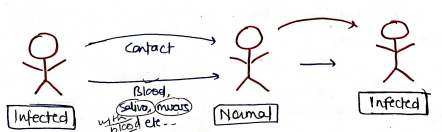
- HIV transmission (through sexual contact, blood transfusion, mother to child)
- Genetic factors (from parents)
- weakened immune system
- low CD4 cell counts (below 200 cells/$mm^3$)
RISK FACTORS
- Unprotected sex
- Multiple sexual partners.
- contamined needles/syringes
- Blood transfusion/organ transplant
NOT SPREAD THROUGH
- Casual contact (Hugging, shaking hands, sharing foods).
- Air/water
- Insect bites
- Saliva, sweat, tears (unless + blood).
HIV
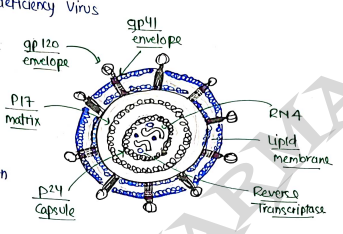
- It is an enveloped RNA virus.
- It contains phospholipid envelope.
- Each peg consist of 3-4 gp41 glycoproteins, capped with 3-4 gp120 glycoproteins.
- Inside envelope, it contain bullet-shaped nucleocapsid of virus made up of proteins and surrounds two single strands of RNA.
TYPES
HIV-1: most common form of virus, responsible for majority in worldwide.
HIV-2: less infectious and less severe than HIV-1, most common in west central Africa, parts of Europe and India.
SIGN AND SYMPTOMS
- fever
- fatique
- weight loss
- Muscle aches
- Joint pain
- Night sweats
- Diarrhea
- Coughing
- shortness of breath
- Others
OTHERS
- Lymphadenopathy (enlargement of lymph node)
- Kaposi's sarcoma (cancer) > 60 yr old
- Lymphoma cancer affects the immune system
- various infections etc_
COMPLICATIONS
- AIDS - most advanced stage of HIV infections.
- These complications can be life-threatening, if left untreated.
- Pneumocystic pneumonia A fungal infection that cause inflammation in lungs.
- Toxoplasmosis A parasitic infection that affects the brain, eyes & other organs.
- Kaposi's sarcoma A type of cancer that cause tumors to form in the skin, lymph nodes and other organs.
- Lymphoma A type of cancer that affects the immune system.
- Tuberculosis A bacterial infection that affects the lungs & other organs.
- Candidiasis A fungal infection that causes yeast infections in the mouth, throat and vagina.
- wasting syndrome A condition characterized by significant weight loss and muscle wasting.
- Others Infections, Cardiovascular disease, cancer, Pulmonary disease, Bone disorders etc..
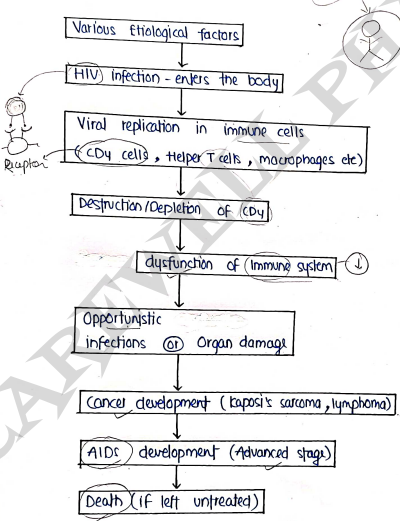
PATHOGENESIS
DIAGNOSIS
- HIV antibody tests
- Viral load tests
- CD4 cell count
TREATMENT
- Antiretroviral therapy
- Cancer treatment
- Supportive care
- Precaution from risk factors/causes.
TUBERCULOSIS (TB)
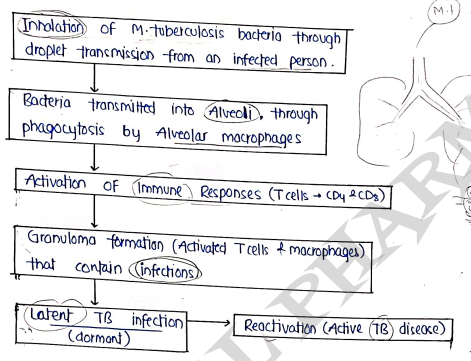
- It is an infectious disease caused by the bacteria Mycobacterium tuberculosis.
- This bacteria usually attack the lungs, but they can also damage other parts of body such as brain, kidney etc..
- TB spreads through the air when a person with active TB infection cough, sneezes, spit, close contact talk.
TYPES
Latent TB infections: The bacteria remain in the body, but the person is not infectious.
Active TB disease: The bacteria multiply and cause symptoms, making the person infectious.
ETIOLOGY
- It is caused by bacteria, Mycobacterium tuberculosis. (small, aerobic, non-motile bacillus, divides 16-20 hours)
- Close contact with TB infected person.
- weakened immune system (e.g. HIV/AIDS, Cancer, Immunosuppressive drugs).
- Age (elderly/young children)
- Poor living condition.
- Malnutrition
SIGN AND SYMPTOMS
- Coughing for three or more weeks (chronic cough)
- Coughing up blood-containing mucus.
- Chest pain or discomfort.
- fatique
- weight loss
- fever
- Night sweats
- Chills
PATHOGENESIS
COMPLICATIONS
- Extrapulmonary spread (TB in other organs)
- Respiratory failure
- Meningitis
- Spinal Joints, Joint damage
- Blurred vision
- Liver or kidney affects
TREATMENTS
- Prevention - Vaccination, mask, avoid contact
- Anti-tubercular drugs - Isoniazid, rifampicin, Para amino salicylic acid etc..
- proper nutritions etc..
UTIs
URINARY TRACT INFECTIONS
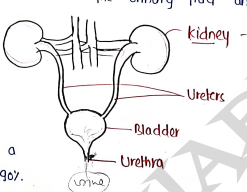
It is an infections that affects the urinary tract and its parts i.e.
- Ureters
- Bladder
- Urethra.
- Kidney
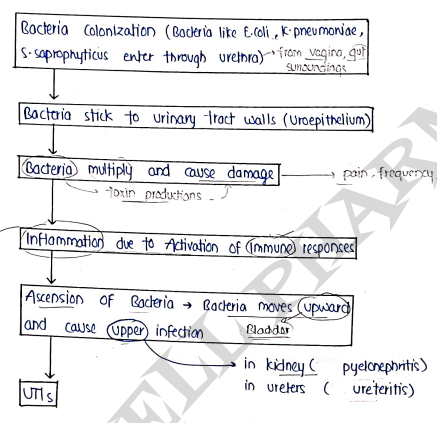
It is mostly caused by a bacteria (E. coli) approx. 90%. then Staphylococcus saprophyticus.
It is most common in womens than man i.e. 8:1 ratio.
TYPES
Lower UTIs: It affects urethra (urethritis) and Bladder (cystitis). It is most common and less severe.
Upper UTIs: It affects ureters and kidney (pyelonephritis). It is more severe life-threatening conditions.
ETIOLOGY
- It is mostly caused due to bacteria Escherichia coli (E. coli) around 90% cases
- Genetic factors (family history)
- Drug induced factors (e.g. Antibiotics).
- Poor hygiene (improper wiping, contaminated clothes)
- Sexual intercourse
- Medical conditions (e.g. diabetes, kidney stones etc).
SYMPTOMS
- Lower UTIs
- Burning sensation while urinating
- frequent urination/ urge to urinate
- cloudy or strong-smelling urine.
- Upper UTIs
- fever, Chills
- Nausea and vomiting
- Pain in back or side (pelvic/rectal pain).
PATHOGENESIS
COMPLICATIONS
- Recurrent UTIs
- Kidney damage/failure
- Blood poisoning/infection septicemia
- Premature birth (pregnancy)
TREATMENTS
- Maintain good hygiene
- staying hydrating (drink water)
- Medications
- Antibiotics - Ciprofloxacin, fluconazole etc..
MENINGITIS
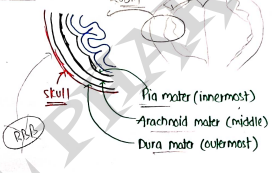
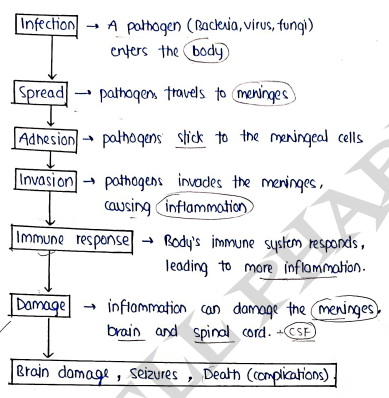
- It is an inflammation of the meninges, the protective membrane made up of connective tissue that covers the brain and spinal cord.
- It is caused by bacterial, viral, parasite or fungal infections.
- In meningitis, the meninges become inflamed Swelling & pressure on brain/s.c Disruption of blood flow/ damage to brain tissue.
ETIOLOGY
Bacteria Neisseria meningitides, M. tuberculosis, Streptococcus pneumoniae (pneumococcus), H. influenzae
Virus Enterovirus (echovirus), HIV, Herpes simplex virus (HSV)
Fungi Cryptococcus neoformans, candida species etc..
SYMPTOMS
- Sudden onset of fever
- Sever headache
- Vomiting
- stiff neck (nuchal rigidity)
- Confusion
- Sensitivity to light (photophobia)
COMPLICATIONS
- Hearing loss
- Learning disabilities
- Impaired memory
- Seizures
- Hydrocephalus (fluid accumulation in brain)
- kidney failure
- shock
- Death
PREVENTION/TREATMENTS
- Vaccines (e.g. meningococcal conjugate vaccines)
- Good hygiene practices
- Avoid close contact with meningitis patients.
- Antibiotics, Antiviral & Antifungal drugs.
DIAGNOSIS
- Physical examination
- Lumbar puncture
- Blood culture, CT Scan, MRI
PATHOGENESIS
TYPHOID
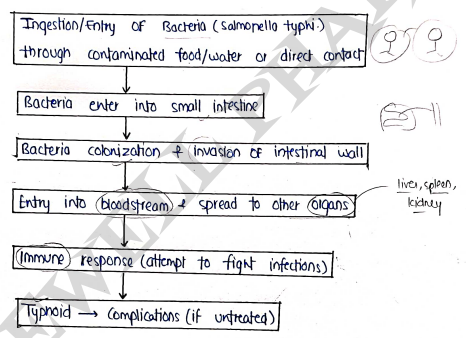
- Typhoid fever is a bacterial infection caused by the bacterium Salmonella typhimurium (S. typhi). Also termed as Enteric fever.
- It is usually spread through contaminated food and water.
- It mainly occurs in the intestines and blood of humans.
ETIOLOGY
- It is caused by a bacteria Salmonella typhi (a gram negative bacterium)
- It can spread through:
- Contaminated food and water (through faeco-oral route)
- direct contact with infected person's feces or urine
RISK FACTORS
- Poor sanitation and hygiene
- Contaminated water supply
- Crowded living conditions
- Lack of vaccination.
SYMPTOMS
- fever (High temperature upto $104^\circ F$)
- Headaches
- Loss of appetite
- fatigue (feeling weak)
- Muscle aches and pain
- Abdominal pain
- Chest congestion
- Diarrhoea/constipation
PATHOGENESIS
COMPLICATIONS
- Perforation of intestine
- Intestinal bleeding
- infections of other organs (Kidney, liver, spleen)
- Meningitis (rare case)
DIAGNOSIS
- Blood culture
- Widal test (antibody)
- Stool test
PREVENTION
- Vaccinations (for travelers/high risk group)
- safe drinking water
- Avoid close contact with infected peoples.
TREATMENTS
- fluid replacement
- Antibiotics (e.g. Ceftriaxone, azithromycin)
- Rest
LEPROSY
- Also known as Hansen's disease.
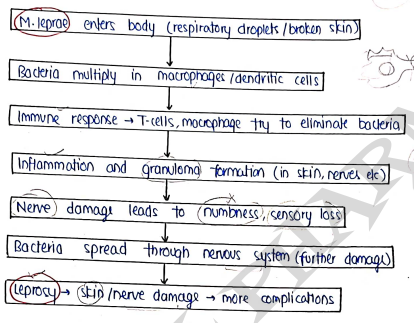
- It is a chronic infectious disease, caused by the bacteria Mycobacterium leprae.
- It affects the nerves, skin, and mucous membrane.
ETIOLOGY
- It is caused by mycobacterium leprae, a slow-growing, acid-fast bacillus.
- It is transmitted /spread through respiratory droplets from infected persons, close contact and broken skin.
RISK FACTORS
- close contact with an infected person.
- Poor sanitation and hygiene.
- weakened immune system
- Genetic susceptibility
- Age (more common in children & young adults)
- Poverty
- malnutrition
SYMPTOMS
- Skin lesions or patches with loss of sensation.
- Numbness in affected areas.
- Pale or red patches on skin.
- Eye problems (dryness, vision loss, ulcers)
- Nerve damage
- thick, stiff, or dry skin
- Severe pain
COMPLICATIONS
- Permanent nerve damage
- Hair loss (on eyebrows / eyelashes)
- Muscle weakness
- Disability in hands & feets
- Glaucoma, Blindness
- erectile dysfunction (infertility)
DIAGNOSIS
- Skin biopsy
- Slit-skin smear test
- Lepromin test
- Clinical diagnosis (Cuts, wounds, skin lesions)
PATHOGENESIS
PREVENTION
- Vaccination (BCG Vaccines)
- Early detection & treatment
TREATMENT
- Antibiotics (rifampicin, clofazimine, dapsone)
- Multidrug therapy.
GONORRHOEA
- It is a sexually transmitted infections (STIs/STDs) caused by the bact
ETIOLOGY
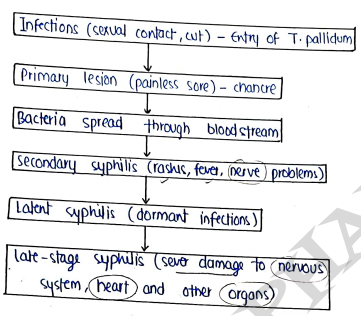
- Caused by Treponema pallidum
- Spread through sexual intercourse, Blood transfusion, mucous contact.
SYMPTOMS
- Painless ulcer or sore (chancre) appears at site of infection (genitals, rectum, mouth)
- Sore throat
- fever
- fatique
- Headache
- Hair loss, Joint pain
- Neurological problems (In advanced stages)
PATHOGENESIS
COMPLICATIONS
- Small bumps/tumours
- Neurological problems
- Cardiovascular problem
TREATMENT
- Safe sex + Avoid contact with infected persons
- Antibiotics (e.g. penicillin)
GONORRHOEA
- It is a sexually transmitted Infections (STIs/STDs) caused by the bacterium Neisseria gonorrhoeae.
- It is transmitted through sexual contact (vaginal, and or oral) and also from mother to child during childbirth.
SYMPTOMS
Females
- Abnormal vaginal discharge
- Burning sensation during urination
- Abdominal pain
- Bleeding b/w periods
Males
- Discharge from penis
- Painful urination
- Painful swelling of testicles
ETIOLOGY
- caused by bacteria Neisseria gonorrhoeae.
PATHOGENESIS
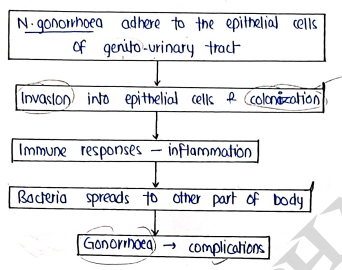
COMPLICATIONS
- Pelvic inflammatory disease (PID)
- Infertility
- Increased risk of HIV transmission
- Meningitis
TREATMENTS
- Safe sex practices
- Regular testing
- Avoid sexual contact during symptoms
- Medications
- Antibiotics (ceftriaxone and Azithromycin)