Human Anatomy And Physiology 2 - Unit 4
Syllabus
Endocrine system Classification of hormones, mechanism of hormone action, structure and functions of pituitary gland, thyroid gland, parathyroid gland, adrenal gland, pancreas, pineal gland, thymus and their disorders.
Scroll to Download
ENDOCRINE SYSTEM
UNIT-4
SYLLABUS
- Classification of hormones, mechanism of hormone action, structure and functions of pituitary glands, thyroid gland, parathyroid gland, adrenal gland, pancrease, pineal gland, thymus and their disorders.
INTRODUCTION
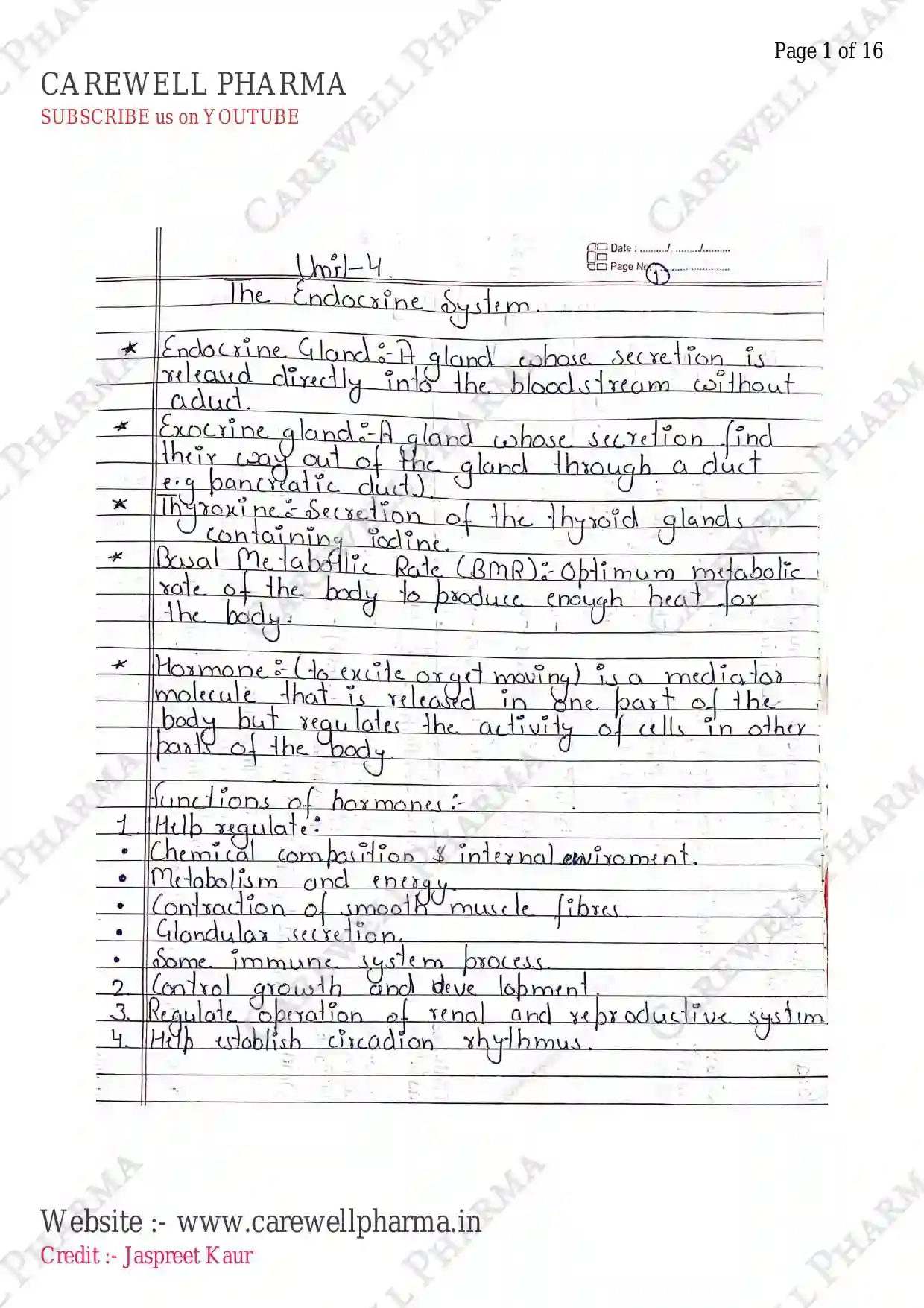
- It is the collection of glands that produces hormones that regulate many physiological functions in body such as growth, metabolism and sexual functions etc..
Glands These are specialized organs or tissues that produce and secrete substances such as hormones, enzymes, or other body fluids, which regulates various bodily functions.
- It is of two types:
- Exocrine glands : These are those glands which release substances through a duct or canal to the desired location. They produce and secrete enzymes, hormones and other substances that help with digestion, absorption and other bodily functions. eg Salivary, sweat, mammary glands etc. Pancrease (Acinar cells).
- Endocrine glands : These are those glands which release hormones directly into bloodstream. These are ductless glands, which regulate metabolic processes, growth and development. eg Pituitary, thyroid, Adrenal glands etc... Pancrease (islets of langerhans).
- The branch of science that deals with the study of Endocrine system is known as endocrinology.
- There are various endocrine glands:-
I. Pituitary Glands
II. Thyroid Glands
III. Adrenal Glands
IV. Pancrease
V. Pineal Glands
VI. Parathyroid Glands
VII. Thymus Glands
VIII. Gonads $\rightarrow$ Testes (in males), Ovaries (in females)
IX. Hypothalamus

- These endocrine system/glands are worked together with Nervous system to control and coordinates the functions of our body.
- This is known as Neuroendocrine system and its study known as Neuroendocrinology.
HORMONES
- These are chemical messengers that are produced from a glands (specialized tissues/cells) in the body that transmit/convey messages from one cell to another.
- Hormones reaches to its target site through blood circulation.
- The main functions of hormones is to control and coordinate different functions of tissues and organs. Also helps in growth and development.

Properties of Hormones
- These may be peptides, steroids, amines or derivatives of amino acids.
- They act in very low concentration.
- They produced their effect on target cells.
- They rapidly destroyed after their function over.
Classification of Hormones
- On the basis of chemical composition, hormones are categorised into two types.
- Lipid-soluble Hormones these are lipid soluble, which includes:-
- Steroid hormones (eg. estrogen, testosterone) - derived from cholesterol
- Thyroid hormones & - produced from thyroid glands.
- Nitric oxide NO.
- Water-Soluble Hormones these are water soluble, which includes:-
- Amine hormones (eg. Epinephrine, Nor-epinephrine)
- Peptide hormones (eg. Insulin, Growth hormones, ACTH, TSH)
- Protein hormones (eg. Luteinizing hormone LH, TSH)
- Lipid-soluble Hormones these are lipid soluble, which includes:-
MECHANISM OF HORMONE ACTION
- Hormones travel/moves through blood and reaches to its target site and perform their functions by binding to the receptor present inside or on the surface of cells.
- Hormones perform their action by forming Hormone-receptor complex.

- Hormones perform their action by two way
- Lipid-soluble Hormones mechanism
Lipid-soluble hormone reaches the target cell and diffuse into the cells $\downarrow$ Binds with receptor, forms hormone-receptor complex and alters gene expression $\downarrow$ form new mRNA, which synthesized proteins $\downarrow$ Cell's activity or cell performs their action by using hormones.

- Water-Soluble Hormones
Water-soluble hormones reached to target site through blood $\downarrow$ Binds to receptor present on the surface of cells $\downarrow$ This activates secondary messenger such as $Ca^{2+}$, cAMP, cGMP etc.. $\downarrow$ These activates other protein kinase enzyme, which cause phosphorylation forms phosphorylated proteins $\downarrow$ Physiological actions

HYPOTHALAMUS
- It is the part of brain, located at the base of brain.
- The main function of hypothalamus is to connect the nervous system to the endocrine system through pituitary glands.
- It is considered as master of "Master gland/Pituitary gland" which control the regulation of hormones by releasing "releasing" or "inhibiting" hormones.
Releasing Hormones Those hormones which stimulates the release of hormones from pituitary glands. Thyrotropin Releasing hormone TRH for TSH, Corticotropin Releasing hormone CRH for Adreno-corticotropin, GHRH Growth Hormone releasing H, Gonadotropin releasing hormone GnRH, LH-RH, FSH-RH, Prolactin releasing factor PRF.
Inhibiting Hormones inhibits the secretion of pituitary hormones. Somatostatin/Growth hormone release inhibitory hormone GHRIH, Prolactin release Inhibitory hormone PRIH.
- Hypothalamus regulates body temp, hunger, thirst, homeostasis and other basic functions.
PITUITARY GLAND
- It is referred as "Master gland" because it monitor and regulate many bodily functions and also control other glands. size of pea.
- Location It is the small organ (diameter 1cm, weight 0.5g). It is located within "sella turcica" at the base of the brain in the sphenoid bone, below the hypothalamus.
- Pituitary gland work in combination with Hypothalamus, in which hypothalamus regulate the secretion of pituitary gland. It joined with hypothalamus through infundibulum.
STRUCTURE
- Pituitary gland is divided into two parts/lobes.
- Anterior pituitary (Adenohypophysis)
- Posterior pituitary (Neurohypophysis)

- Anterior pituitary contains about 75% of total weight, mainly considered as master gland and made up of pharangeal epithelium.
- Posterior Pituitary around 25% and made up of axon & axon terminals (nervous system).
REGULATION OF HORMONES
- Pituitary gland releases their hormones with the help of Hypothalamus via feedback mechanism.

I. Growth Hormone (GH) Also known as Somatotropic hormone and it is secreted by acidophil cells of anterior pituitary gland.
- It is a peptide hormones that stimulates growth and cell reproduction.
- The secretion of Growth hormone from the anterior pituitary is controlled by hypothalamus through GH releasing factor.
Functions:
- increases body growth
- promote utilization of fats, Carbohydrates by inducing proteins, fat and carbohydrate metabolism.
- Regulates growth and developement during childhood and at adolescence.
- promotes cells reproduction and regeneration.
- stimulates protein synthesis and bone growth.
- helps regulate metabolism and energy balance.
- Involved in immune system functions.
II. Thyroid stimulating hormones (TSH) It is a glycoprotein hormones produced by the anterior pituitary that stimulates the production of Thyroxine and Triiodothyronine from the thyroid glands.
- It is regulated by hormone thyroid releasing hormones TRH.
III. Adrenocorticotropic hormone (ACTH) It is a peptide hormone produced by the anterior pituitary that stimulates the production of corticosteroids from the adrenal glands.
- It stimulates the production of cortisol, aldosterone and androgens.
IV. Prolactin (PRL) It is a protein hormone produced by the anterior pituitary gland that play a crucial role in lactation and breastfeeding.
- It stimulates milk production in the mammary glands during pregnancy and lactation.
- helps in development of mammary gland growth.
V. Gonadotropins These are group of protein hormones that regulates the functions of the gonads (ovaries and testes).
- FSH follicle-stimulating Hormone it stimulates follicular growth and maturation in the ovaries. It also regulates sperm production.
- LH Luteinizing hormone, it triggers ovulation and corpus luteum formation in the ovaries. It stimulates testosterone production.
- Gonadotropins play a crucial role in regulating the menstrual cycle, fertility and sexual development.
VI. Oxytocin (Love hormone) It is a peptide hormone produced by the hypothalamus and released by the posterior pituitary gland that play a major role in social bonding, childbirth and lactation.
- It stimulates uterine contractions during childbirth.
- Regulate milk during lactation.
- Regulates stress response, anxiety and trust.
VII. Anti-Diuretic Hormone (ADH) It is also known as Vasopressin. It is a peptide hormone produced by the hypothalamus and released by the posterior pituitary gland that regulates water balance and blood pressure.
- It decreases the urine amount excreted and increases the water amount absorbed by the kidneys.
- It also regulates the fluid balance in the body.
ADRENAL GLAND
- These are two small glands located on the top of the kidneys.
- Also known as Suprarenal gland.

- It play a various role in body responses to stress, regulationg blood pressure and maintaining electrolyte balance by releasing various corticosteroids hormones.

- They are about 4cm long, 3cm thick and 4gm in weight.
- These glands are composed of two parts, having different structure & functions.
- Adrenal cortex
- Adrenal Medulla
Adrenal Cortex
- It is the outermost layer of adrenal gland which comprises of about 80-90% of the gland.
- It is made up from a renal tissue and contains three zones:
- Zona Glomerulosa outermost layer secretes mineralocorticosteroids. Aldosterone.
- Zona fasciculata middle layer secretes glucocorticoids.
- Zona reticularis inner layer/zone secretes sex hormones.
Functions:
- Mineralocorticosteroids: Aldosterone is the main mineralocorticoid hormone. It stimulates Sodium resorption and increases potassium excreation by the kidneys, intestines, salivary glands and sweat.
- Aldosterone along with angiotensin II stimulates the RAAS system which regulates the blood pressure.
- Glucocorticoids:
- Cortisol (hydrocortisone) is the main glucocorticoid but small amount of corticosterone and cortisone are also produced.
- These all are collectively known as steroids / corticosteroids.
- It is stimulated by ACTH from the anterior pituitary and by stress.
- It is essential for life, regulating metabolism and responses to stress.
- It increases blood sugar levels.
- It also produce anti-inflammatory responses.
- Regulate immune system.
- Sex hormone:
- Androgen is the major sex hormone, produced in small amount from zona reticularis.
- It helps in the development of sexual characteristics (eg. puberty) and in reproductive functions.
Adrenal Medulla
- It is the inner part of adrenal gland and it is about 10-20% of total gland.
- It is made up from nervous tissue and a part of sympathetic nervous system which act as emergency gland.
- It secretes two hormones:
- Epinephrine (Adrenaline) It secretes in large amount (around 80%) which increases heart rate, blood pressure and energy metabolism. prepares body for "fight or flight" response.
- Norepinephrine (Nor-adrenaline) It secretes in low amount (around 20%). increases blood pressure, heart rate and energy metabolism. contributes to stress response and attention.
- These both hormones secreted from medulla due to activation of Sympathetic Nervous System.
THYROID GLAND
- It is the largest endocrine gland situated in the neck in front of the larynx and trachea at the level of the 5th, 6th, 7th cervical and 1st thoracic vertebrae.
- It is about 25 gm and its lobes are roughly cone shaped, about 5cm long and 3cm wide.
- It is H-shaped organ and their lobes are Butterfly-shaped.

Around 3 million of small, oval, or rounded thyroid follicles and stromal tissue make up the thyroid gland.
space b/w thyroid follicles are parafollicular cells. (endocrine cells).
It secretes mainly two types of hormones:-
- Thyroid hormones &
- Calcitonin hormone
Thyroid hormones
- There are mainly two hormones i.e. Tri-iodothyronine and Thyroxine .
- These are made up from iodine from blood, called iodine trapping.
- The release of and is controlled by Thyroid stimulating hormone TSH released from anterior pituitary, which is stimulated by Thyrotrophin releasing hormone TRH from hypothalamus.
Functions
- These are essential for normal growth and development, especially of the skeleton and nervous system.
- It also known as master hormones, because it influenced other organs/system.
- It regulate BMR (Basal metabolic Rate).
- It regulates metabolism of Proteins, carbohydrates & fats.
- Control urine output, development of mental facilities & ↑ action of Adrenalin & NA.
Calcitonin
- Also known as thyrocalcitonin (TCT), it is a peptide hormone released from the parafollicular cells of thyroid gland.
- It is basically used to regulates the calcium level in the blood.
- It inhibits the bone resorption (decreases osteoporosis & osteoclast), lowers the level of in blood (hypercalcaemia).
PARATHYROID GLAND
- These are small, oval shaped gland located in the neck, present within the posterior part of thyroid gland.
- It helps to regulate the calcium level of blood by producing parathyroid hormone (PTH).
- It is made up of epithelial cells, which consist of chief cells and oxyphil cells.

Parathyroid hormone (PTH)
- Also called Collip's hormone secreted from chief cells.
- The main function of PTH to maintain blood calcium level by:-
- increases absorption of from small intestine or from food.
- increase reabsorption of from renal tubules / kidneys.
- resorption of bones (from bones).
- PTH and Calcitonin works together to maintain blood calcium level.
DISORDERS
- Thyroid Gland
- Hyperthyroidism ↑ level of thyroid hormones.
- Hypothyroidism ↓ secretion of thyroid hormones. It leads to myxedema (in adults), cretinism (in children).
- Goiter enlargement of thyroid gland.
- Parathyroid Gland
- Hypoparathyroidism ↓ secretion of PTH leads to hypocalcemia.
- Hyper parathyroidism ↑ secretion of PTH, leads to hypercalcemia.
PANCREAS
- It is a composite organs that acts as both exocrine and endocrine gland.
- Exocrine pancrease produce enzymes and contains about 95% part.
- Endocrine pancrease produce hormones and contains only 5% part.

It is present at the posterior part of stomach. It extends between the c-shaped curvature of duodenum and the spleen. It contains head, body and tail.
It is about 12-15 cm (5-6 inch) long and 2.5 cm (1 inch) thick.
There are three main types of cells in the pancreatic islets or islets of langerhans:
- Alpha cells secrete glucagon.
- Beta cells present in more amount, secrete insulin.
- delta cells secretes somatostatin (GHRIH).
GLUCAGON
- It is a peptide hormone, produced by the $\alpha$-cells of islets of langerhans.
- It is used to raise the blood glucose levels.
- It stimulates glycogenolysis (breakdown of glycogen to glucose).
- stimulates gluconeogenesis (production of glucose from pyruvate).
- increases glucose release from the liver into bloodstream.
- It counteracts the effect of insulin.
INSULIN
- It is a peptide hormone produced by the Beta cells of islets of langerhans that regulates blood glucose levels by facilitating glucose uptake in cells.
- It stimulates glucose uptake in cells, particularly in muscle and liver cells.
- It regulates fat metabolism, promoting lipid synthesis and storage.
- It promotes glycogen synthesis in the liver and muscles.
- main role is to prevent diabetes mellitus (↑ level of glucose in blood).

SOMATOSTATIN
- It is produced by delta cell of islets of langerhans, and also produced by hypothalamus.
- The main role of somatostatin is to inhibits the secretion of both insulin and glucagon in addition to inhibiting the secretion of GH (Growth hormone) from anterior pituitary.
PINEAL GLAND
- It is the smallest endocrine gland located in the diencephalic area (roof of third ventricle and is connected to it by a short stalk).
- It is about 10 mm long, reddish brown in color & surrounded by capsule.
- It secretes melatonin, which is used to promote sleepiness and help regulate the body's biological clock (circadian rhythm).
- Biological clock mainly regulates the sleep-wake pattern, hunger etc..
- It also controls the release of sex hormones.
THYMUS
- It is a small, pinkish-gray colored, lobular structure located in the thoracic cavity (front of trachea, below the thyroid gland).
- It play a major role in the development of immune system.
- It secretes thymosin hormone.
- Thymosin:
- It promotes the proliferation and maturation of T cells/lymphocytes (white blood cells which destroy microbes and foreign substances).
- It also promotes the production of antibodies to provide immunity.

OTHERS
- Gonads
- Ovaries (in females) Estrogens, Progesterone
- Testes (in males) Testosterone
- Other local hormones
- Histamines
- Serotonin (5-HT)
- Prostaglandins (PGs)